Uh oh!
You landed in internet Middle Earth! Let us help you find what you are looking for!
Posts on Forgiveness
The Lord's prayer is one of the most well-known passages of scripture worldwide. Many Christian traditions recite the Lord's prayer daily as part of their liturgy. One would be hard-pressed to find someone who hasn't recited or heard the Lord's prayer at some point in their life. But it’s interesting to me how often people miss what Jesus is actually instructing us to pray in this model prayer.
There is one clause in the Lord's prayer that Jesus attaches a condition to, and it involves forgiveness. We have found most people are surprised to learn that the condition is the exact opposite of what we would expect. If I were to predict the condition about forgiveness that Jesus would ask us to pray in a model prayer, it would be something like this: “Lord, help me forgive others the way you have forgiven me,” but it is the exact opposite of that. What Jesus is actually telling us to pray is, “Dear Heavenly Father, please use the standard I use in dealing with the people who wound me as the standard you use to relate to me.” You wouldn’t believe how many confused looks I get when I point this out to people. Why? Why are people so surprised when they realize that God ties how we forgive others with how He relates to us? The answer lies in understanding why God created us and why He redeemed us.
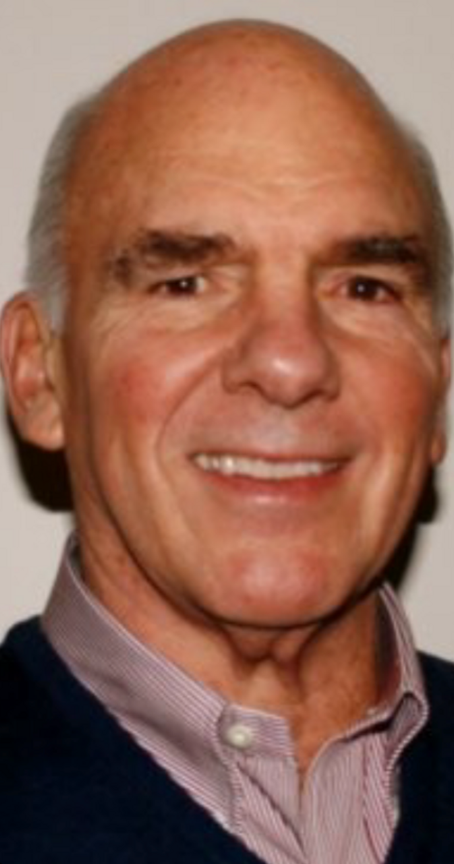
In March 2009, Dr. Bruce Wilkinson challenged us to leave the local church and carry the message of forgiveness God had given us to the church worldwide. We immediately pushed back at the suggestion because pastoring the local church was our calling and the primary reason we had not quit the ministry after all we had gone through. Dr. Wilkinson's response was, "Don't take my word for it; go ask a mentor you trust and see what they think God wants you to do." As many of you know, if you’ve heard the Forgiving Forward story, I met with Tom Rowe on March 19, 2009, who affirmed what Bruce Wilkinson was suggesting to us. Later that day, as we prayed together, Toni and I confirmed in our spirits that we were to launch what has become Forgiving Forward.
Still, at our core we were wrestling with the decision and all the logistics involved. We knew we needed help working through it, so we reached out to John and Kathie Sipple to get their counsel.
On July 4, 1776, 250 years ago this Saturday, during the 2nd Continental Congress, the 56 delegates from the 13 original American Colonies voted to approve and adopt the Declaration of Independence, thereby declaring themselves free from the tyrannical rule of King George of Great Britain. Drafted by Thomas Jefferson and edited by John Adams and others, the Preamble famously proclaims:
“We hold these truths to be self-evident, that all men are created equal, that they are endowed by their Creator with certain unalienable Rights, that among these are Life, Liberty and the pursuit of Happiness.”
In what is considered to be one of the most significant lines in historical literature, Jefferson declares the undeniable truth that deep within the human soul is the yearning for freedom. The Declaration of Independence formalized the American Revolutionary War, in which our founding fathers fought and died to secure our independence as a nation so as to provide the liberties and benefits we are now afforded as citizens of this great nation. Our freedom was purchased with their blood! We honor them by remembering their sacrifice and living in the freedom they purchased for us.

We live in a culture that bombards us with demands for self-sufficiency. Self-sufficiency is the mindset that says, “I can handle this.” “Look at all I’ve done.” or “If I need God, I will give Him a call.” An elevated view of myself always comes from a low view of God.
Ben Patterson said, “We have trivialized God.” If we are honest with ourselves, we are consistently guilty of downsizing God. When we do, we invariably upsize ourselves. We have been duped into believing our own press clippings and not enough of God’s Word. Forgetting who is ultimately responsible for our success, we are seduced into believing that we are self-sufficient and we don’t need God. The consequences could not be more tragic.
In 2 Chronicles 26, we find the account of an Old Testament king who suffered the consequences of becoming self-sufficient. Uzziah was 16 years old when he became king of Judah; he ruled 52 years and “did right in the sight of the Lord.” The historian Jerome said, “The national glory of Israel died with King Uzziah and has never returned to this day.”
Uzziah was brilliant in many areas. He was a builder. He built Eloth (vs 2), cities around Ashdod (vs 6), towers in the wilderness and on the gates of Jerusalem, as well as fortified corner buttresses on the walls (vs 9-10). He was an agriculturalist; he built cisterns in the dry arid land of Israel to water his livestock, crops, and vineyards (vs 10). He was a military mastermind and inventor. According to verse 15, Uzziah was responsible for the creation of the crossbow and catapults.
Biblically, a posture is a physical position in worship that reflects the heart's attitude of reverence towards God and our dependence on Him. At the beginning of this year, the Lord impressed on us that there are six postures—six mindsets—that He wants to undergird and inform our prayers for Forgiving Forward.
All for God’s Glory
Jesus Focused
Shepherd Led
Gospel-Centric
Abiding Trust
Self Denied
This is the sixth in a series of blogs unpacking each of the postures that guide the ministry of Forgiving Forward. The sixth posture is:
Self Denied
He who has found his life will lose it, and he who has lost his life for My sake will find it.
Matthew 10:39
Could it be that the biggest challenge to God's glory and position in our lives is us? Is it possible that we have met our own worst enemy, and it’s the dude or dudette staring back at us in the mirror?
“I have now concentrated all my prayers into one, and that one prayer is this, that I may die to self, and live wholly to Him.”
Charles H. Spurgeon
At the core of the original sin in Genesis 3 was the lure of self-determination, of choosing our will over God’s will, our choice over God’s command. With two bites of the fruit, the flesh of mankind was born, which spread into the DNA of every one of Adam’s descendants, all the way down to you and me. The flesh is the spiritual force that dwells within us which is anti-God and produces sin in us. As long as our earthsuits are breathing, even after we move from death to Life in Jesus, the flesh entices us to continue to eat from the same tree our first father tasted. And we do—constantly—and everything becomes about ME, what I want, what I think I need over God’s will. It always ends with the same results—Death! Not the same spiritual death Adam and Eve experienced, but relational death. We are still God’s children, but we lose the joy of His Life in us.
For I handed down to you as of first importance what I also received, that Christ died for our sins according to the Scriptures, and that He was buried, and that He was raised on the third day according to the Scriptures, and that He appeared to Cephas, then to the twelve. After that He appeared to more than five hundred brothers and sisters at one time, most of whom remain until now, but some have fallen asleep; then He appeared to James, then to all the apostles; and last of all, as to one untimely born, He appeared to me also. 1 Corinthians 15:3-8:
We are taking a pause on our series called Our Postures to celebrate the greatest event in all of history—the Death and Resurrection of Our Savior, Jesus Christ. Believers around the globe will gather together in multiple services this week to commemorate Holy Week, culminating in Resurrection Sunday. The Gospel is fully expressed and wholly contained in the Cross and the Empty Tomb.
The Gospel can be divided into two parts. First, Jesus died for our sins, and the proof that He died is that He was buried. People are buried because they are dead. Second, Jesus was raised from the dead and walked out of the tomb on the third day. The proof of the resurrection is that people saw Him. Not just Peter and the disciples, but over 500 people saw Him at one time. The resurrection of Jesus is one of the most historically attested events. That’s the Gospel. Jesus died and rose from the grave. Hallelujah!
Why did Christ die? He died for our sins. He died so that we could be forgiven.

Biblically, a posture is a physical position in worship that reflects the heart's attitude of reverence towards God and our dependence on Him. At the beginning of this year, the Lord impressed on us that there are six postures—six mindsets—that He wants to undergird and inform our prayers for Forgiving Forward.
All for God’s Glory
Jesus Focused
Shepherd Led
Gospel-Centric
Abiding Trust
Self Denied
This is the fifth in a series of blogs unpacking each of the postures that guide the ministry of Forgiving Forward. The fifth posture is:
Abiding Trust
I am the vine, you are the branches; he who abides in Me and I in him,
he bears much fruit, for apart from Me you can do nothing.
John 15:5
Several years ago, I heard Chip Ingram share that he had read a chapter in A. W. Tozer’s classic book The Knowledge of the Holy, which is an examination of the attributes of God, every day for over 30 years. Because I respect Chip, I was intrigued, so I decided to give it a shot. Since that time, my morning routine includes reading a chapter of Tozer’s book every day. There are 23 chapters, and when I finish chapter 23, I start over with chapter 1. I read it about 15 times a year. Why? The main reason lies in two statements Tozer makes in the book. The first line of the first chapter reads, “What comes into our minds when we think about God is the most important thing about us.” The second statement is found in the preface, “The low of God entertained almost universally among Christians is the cause of 100 lesser evils everywhere among us.” Tozer’s overarching premise is that our view of God determines and impacts everything we think, say, and do.
As I continue to saturate my mind with the attributes of God that He has revealed to us in His word, my perspectives on everything have been re-ordered and renewed. I have found that the more I get to know God, the more I find myself trusting Him more and trusting myself less. But it is a challenge, isn’t it? Here’s Tozer again, “Left to ourselves, we tend immediately to reduce God to manageable terms. We want to get Him where we can use Him, or at least know where He is when we need Him. We want a God we can, in some measure, control.” I don’t know about you, but I tend to downsize God regularly. How often do we view God as the “Heavenly Express Card,” something we keep hidden in our wallet and whip out when we need Him? The problem is that when we downsize God, we upsize ourselves, which is the root cause of most, if not all, of our troubles. The essence of idolatry, according to Tozer, is “the entertainment of thoughts about God that are unworthy of Him.” Ouch!
Our Postures—Part Four
As I shared in the previous blogs, Toni and I spend time together at the beginning of each year seeking God’s heart for Forgiving Forward. The key question we ask is, “Lord, what do You want us to ask You for in the coming year?” This year, as Toni and I sat together, listening and processing, God took us back to the basics so that we could codify what had been our heart posture all along. Biblically, a posture is a physical position in worship that reflects the heart's attitude of reverence towards God and our dependence on Him. The Lord gave us six postures—six mindsets—that will undergird and inform our prayers for Forgiving Forward.
All for God’s Glory
Jesus Focused
Shepherd Led
Gospel-Centric
Abiding Trust
Self Denied
This is the fourth in a series of blogs unpacking each of the postures that guide the ministry of Forgiving Forward. In the previous blogs, we discussed “All for God's Glory,” “Jesus Focused,” and “Shepherd Led.” The fourth posture is:
Gospel-Centric
For I determined to know nothing among you except Jesus Christ, and Him crucified. 1 Corinthians 2:2
One of the main concerns I have with most forgiveness models, including the one I used to follow, is that they do not address the “who pays?” question. When someone wounds us, there is a loss—something is damaged, a debt is incurred. Forgiveness requires the settling of the debt. Just choosing to forgive someone doesn’t eliminate the impact of what happened. The debt remains and must be addressed. Forgiveness simply shifts the responsibility for the debt from the one who caused it to someone else who will cover it. In most models of forgiveness, that someone else is us. Basically, intentionally or by default, we absorb the debt. We may deny it, “I’m OK, it doesn’t matter—It’s no big deal.” Or we may excuse it, “ They’re hurting. They didn’t mean to hurt me.” In either case, we absorb the unresolved debt, which will ultimately lead to bitterness and pride. “It’s not right, but look how spiritual I am!” However, in the Gospel, Jesus is the One who pays the debt. Jesus became human so that He could fully satisfy our sin debt to God by shedding His righteous blood on the Cross. Jesus, being fully God and fully human, was the only one who could pay that debt and thereby establish the basis for our forgiveness, restoring us to a relationship with God so that we could live His Life.
As I shared in the previous blogs, Toni and I spend time together at the beginning of each year seeking God’s heart for Forgiving Forward. The key question we ask is, “Lord, what do You want us to ask You for in the coming year?” This year, as Toni and I sat together, listening and processing, God took us back to the basics so that we could codify what had been our heart posture all along. Biblically, a posture is a physical position in worship that reflects the heart's attitude of reverence towards God and our dependence on Him. The Lord gave us six postures—six mindsets—that will undergird and inform our prayers for Forgiving Forward.
All for God’s Glory
Jesus Focused
Shepherd Led
Gospel-Centric
Abiding Trust
Self Denied
This is the third in a series of blog posts unpacking each of the postures that guide the ministry of Forgiving Forward. In the previous blogs, we discussed “All for God's Glory” and “Jesus Focused.” The third posture is:
Shepherd Led
The mind of a person plans his way, but the LORD directs his steps.
Proverbs 16:9
Most organizations and ministries spend considerable time developing their ten-year, five-year, and one-year plans, as well as their purpose, mission, and value statements. The strategy is to develop their long-term plan, then break it down into manageable action steps to get them there in the short term. So naturally, we are often asked, “What is your ministry plan?” I always answer the same way. Our ministry plan is “Savior, like a Shepherd, lead us.” That’s it! That’s all I’ve got because that’s all we need.
Don’t get me wrong, I’m OK with strategic plans. We have them, and we do use a calendar. We have a purpose statement, a passion statement, and a mission statement. They’re helpful in many ways as we lead Forgiving Forward, but they must be held loosely. We believe that the One who is the head of the ministry must be the One who guides the ministry. Jesus is the head of the ministry, and He gets to lead it. Our plan is to follow Him!
STORE

What if I told you forgiveness was possible? What if the deepest betrayals could be dealt with here, today—right now? What if you could finally be free from torment?
Too often we think of forgiveness as some long process we need to go through before we can have peace. Nothing could be further from the truth. Actually, forgiveness is transactional. When someone wounds us, a debt is incurred. The payment required to truly make us whole again is staggering. And who pays? No amount of apologies or other forms of restitution from the offending party could ever cover the cost of their sin that wounded us. But there is good news! God has given us a strategy in His Word to help us live out Gospel-centric forgiveness. To truly forgive someone, we must look to the Cross where the blood of Jesus covers all sin, including the ones that wound us.
IF YOU CUT THE GOSPEL ANYWHERE, IT BLEEDS FORGIVENESS.

Forgiving Forward is a Gospel-rooted teaching that will help you forgive the people who have wounded you while simultaneously equipping you to teach others how to forgive. The tools this audiobook teaches will restore marriages, reunite families, and unify churches. This Seven CD audiobook is read by the authors.
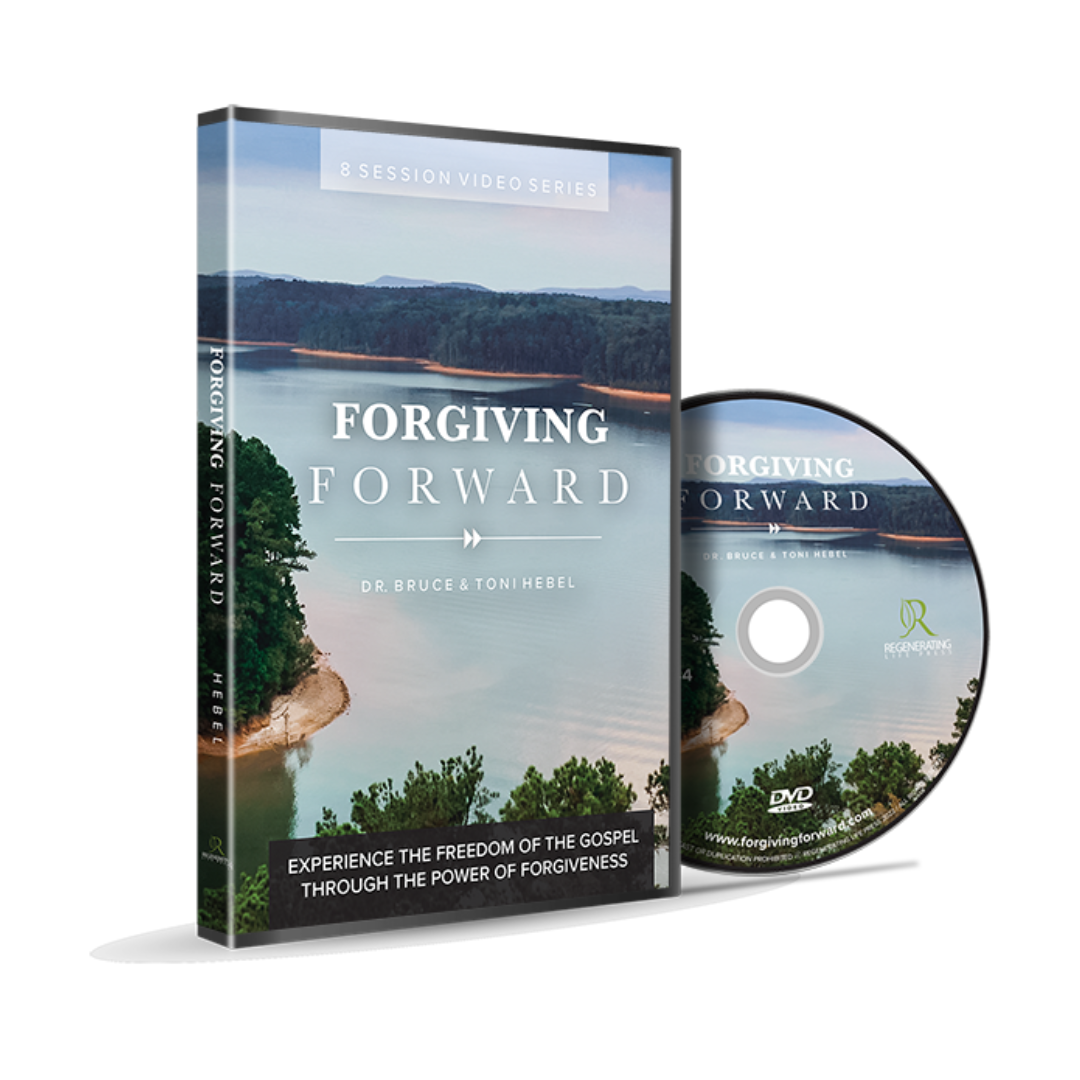
What if I told you forgiveness was possible? What if the deepest betrayals could be dealt with here, today—right now? What if you could finally be free from torment?
Too often we think of forgiveness as some long process we need to go through before we can have peace. Nothing could be further from the truth. Actually, forgiveness is transactional. When someone wounds us, a debt is incurred. But what is fair compensation for the damages we’ve suffered? What would be enough to heal the wound? And who pays?
The payment required to truly make us whole again is staggering. No amount of apologies or other forms of restitution from the offending party could ever cover the cost of their sin that wounded us. But there is good news! God has given us a strategy in His Word to help us live out Gospel-centric forgiveness. To truly forgive someone, we must look to the cross where the blood of Jesus covers all sin, including the ones that wound us.
As we study together the Lord’s Prayer, the parable of the unforgiving servant found in Matthew 18, the model of how Jesus forgave, as well as other scriptures, we will share with you the practical Biblical protocols of forgiveness. In this series, you will learn not only how to truly forgive someone but also how to help others forgive.
***All DVD Orders come with One Study Guide!
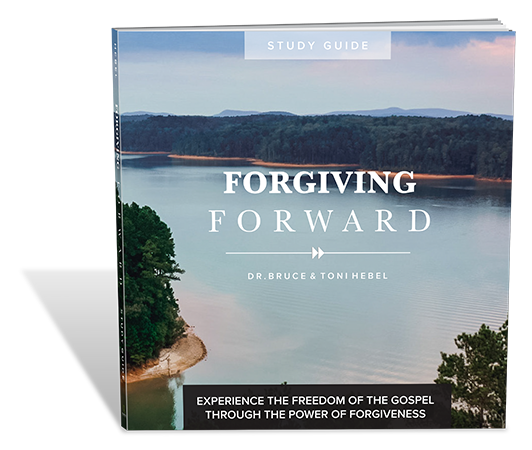
In this study guide, a companion to the Forgiving Forward Video Series, author and teacher Dr. Bruce Hebel draws a road map to lasting life change through the power of forgiveness. Each section follows alongside an approximate 20–25 minute video segment (DVDs sold separately) and gives you tools for practical development.

In this study guide, a companion to the life changing video series Forgiving Forward, author and teacher Dr. Bruce Hebel draws a road map to lasting life change through the power of forgiveness. Each section follows alongside an approximate 20–25 minute video segment (DVDs/Course sold separately) and gives you tools to help you forgive and help others forgive
You will receive an email after purchase for digital download of the complete study guide!
Someone once said, “Expectation is planned resentment.” So many of the wounds we suffer, we suffer at our own doing—placing expectations on others to meet our emotional needs—the needs only God can meet. In this single CD, Toni shares a life-changing message on how you can be free from depending on people to meet your emotional needs and enjoy God as your Source.