
JOIN OUR NEWSLETTER!
When you Join our Email List, you will get your own copy of our Forgiveness Guide in your inbox! Viva la Revolution!
We only send you the good stuff including new blogs, ministry updates, and stories of how people are finding freedom through forgiveness!
Check out some of our latest blogs!
The Lord's prayer is one of the most well-known passages of scripture worldwide. Many Christian traditions recite the Lord's prayer daily as part of their liturgy. One would be hard-pressed to find someone who hasn't recited or heard the Lord's prayer at some point in their life. But it’s interesting to me how often people miss what Jesus is actually instructing us to pray in this model prayer.
There is one clause in the Lord's prayer that Jesus attaches a condition to, and it involves forgiveness. We have found most people are surprised to learn that the condition is the exact opposite of what we would expect. If I were to predict the condition about forgiveness that Jesus would ask us to pray in a model prayer, it would be something like this: “Lord, help me forgive others the way you have forgiven me,” but it is the exact opposite of that. What Jesus is actually telling us to pray is, “Dear Heavenly Father, please use the standard I use in dealing with the people who wound me as the standard you use to relate to me.” You wouldn’t believe how many confused looks I get when I point this out to people. Why? Why are people so surprised when they realize that God ties how we forgive others with how He relates to us? The answer lies in understanding why God created us and why He redeemed us.
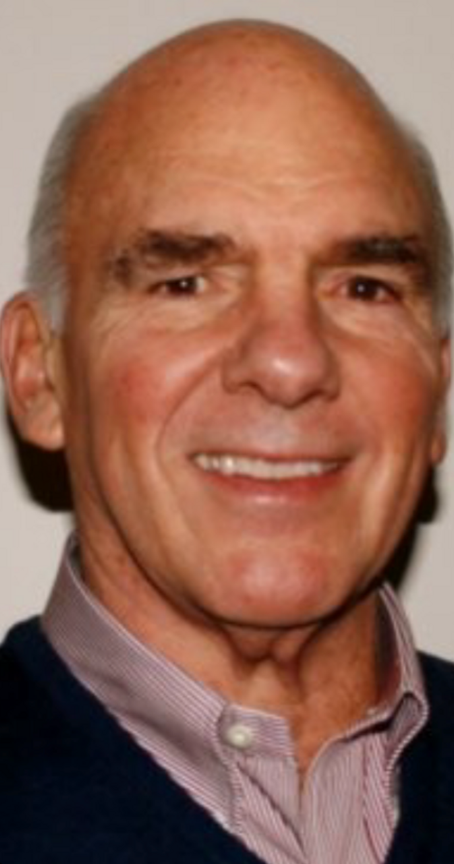
In March 2009, Dr. Bruce Wilkinson challenged us to leave the local church and carry the message of forgiveness God had given us to the church worldwide. We immediately pushed back at the suggestion because pastoring the local church was our calling and the primary reason we had not quit the ministry after all we had gone through. Dr. Wilkinson's response was, "Don't take my word for it; go ask a mentor you trust and see what they think God wants you to do." As many of you know, if you’ve heard the Forgiving Forward story, I met with Tom Rowe on March 19, 2009, who affirmed what Bruce Wilkinson was suggesting to us. Later that day, as we prayed together, Toni and I confirmed in our spirits that we were to launch what has become Forgiving Forward.
Still, at our core we were wrestling with the decision and all the logistics involved. We knew we needed help working through it, so we reached out to John and Kathie Sipple to get their counsel.
On July 4, 1776, 250 years ago this Saturday, during the 2nd Continental Congress, the 56 delegates from the 13 original American Colonies voted to approve and adopt the Declaration of Independence, thereby declaring themselves free from the tyrannical rule of King George of Great Britain. Drafted by Thomas Jefferson and edited by John Adams and others, the Preamble famously proclaims:
“We hold these truths to be self-evident, that all men are created equal, that they are endowed by their Creator with certain unalienable Rights, that among these are Life, Liberty and the pursuit of Happiness.”
In what is considered to be one of the most significant lines in historical literature, Jefferson declares the undeniable truth that deep within the human soul is the yearning for freedom. The Declaration of Independence formalized the American Revolutionary War, in which our founding fathers fought and died to secure our independence as a nation so as to provide the liberties and benefits we are now afforded as citizens of this great nation. Our freedom was purchased with their blood! We honor them by remembering their sacrifice and living in the freedom they purchased for us.

We live in a culture that bombards us with demands for self-sufficiency. Self-sufficiency is the mindset that says, “I can handle this.” “Look at all I’ve done.” or “If I need God, I will give Him a call.” An elevated view of myself always comes from a low view of God.
Ben Patterson said, “We have trivialized God.” If we are honest with ourselves, we are consistently guilty of downsizing God. When we do, we invariably upsize ourselves. We have been duped into believing our own press clippings and not enough of God’s Word. Forgetting who is ultimately responsible for our success, we are seduced into believing that we are self-sufficient and we don’t need God. The consequences could not be more tragic.
In 2 Chronicles 26, we find the account of an Old Testament king who suffered the consequences of becoming self-sufficient. Uzziah was 16 years old when he became king of Judah; he ruled 52 years and “did right in the sight of the Lord.” The historian Jerome said, “The national glory of Israel died with King Uzziah and has never returned to this day.”
Uzziah was brilliant in many areas. He was a builder. He built Eloth (vs 2), cities around Ashdod (vs 6), towers in the wilderness and on the gates of Jerusalem, as well as fortified corner buttresses on the walls (vs 9-10). He was an agriculturalist; he built cisterns in the dry arid land of Israel to water his livestock, crops, and vineyards (vs 10). He was a military mastermind and inventor. According to verse 15, Uzziah was responsible for the creation of the crossbow and catapults.