
Forgiving Forward Blog
A collection of forgiveness blogs, mission work updates, and life-giving videos and interviews that will inspire you to forgive and help others forgive.
GET ENCOURAGEMENT SENT RIGHT TO YOUR INBOX!
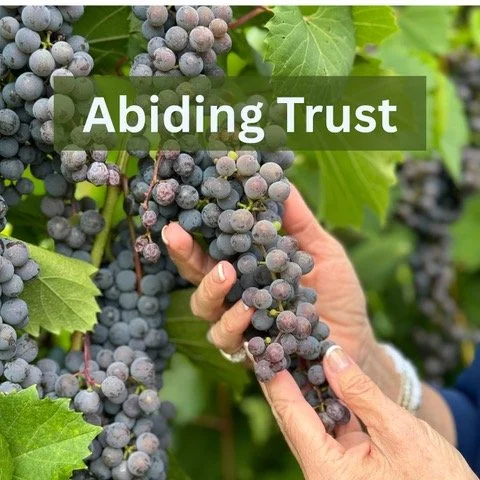
ABIDING TRUST
Biblically, a posture is a physical position in worship that reflects the heart's attitude of reverence towards God and our dependence on Him. At the beginning of this year, the Lord impressed on us that there are six postures—six mindsets—that He wants to undergird and inform our prayers for Forgiving Forward.
All for God’s Glory
Jesus Focused
Shepherd Led
Gospel-Centric
Abiding Trust
Self Denied
This is the fifth in a series of blogs unpacking each of the postures that guide the ministry of Forgiving Forward. The fifth posture is:
Abiding Trust
I am the vine, you are the branches; he who abides in Me and I in him,
he bears much fruit, for apart from Me you can do nothing.
John 15:5
Several years ago, I heard Chip Ingram share that he had read a chapter in A. W. Tozer’s classic book The Knowledge of the Holy, which is an examination of the attributes of God, every day for over 30 years. Because I respect Chip, I was intrigued, so I decided to give it a shot. Since that time, my morning routine includes reading a chapter of Tozer’s book every day. There are 23 chapters, and when I finish chapter 23, I start over with chapter 1. I read it about 15 times a year. Why? The main reason lies in two statements Tozer makes in the book. The first line of the first chapter reads, “What comes into our minds when we think about God is the most important thing about us.” The second statement is found in the preface, “The low of God entertained almost universally among Christians is the cause of 100 lesser evils everywhere among us.” Tozer’s overarching premise is that our view of God determines and impacts everything we think, say, and do.
As I continue to saturate my mind with the attributes of God that He has revealed to us in His word, my perspectives on everything have been re-ordered and renewed. I have found that the more I get to know God, the more I find myself trusting Him more and trusting myself less. But it is a challenge, isn’t it? Here’s Tozer again, “Left to ourselves, we tend immediately to reduce God to manageable terms. We want to get Him where we can use Him, or at least know where He is when we need Him. We want a God we can, in some measure, control.” I don’t know about you, but I tend to downsize God regularly. How often do we view God as the “Heavenly Express Card,” something we keep hidden in our wallet and whip out when we need Him? The problem is that when we downsize God, we upsize ourselves, which is the root cause of most, if not all, of our troubles. The essence of idolatry, according to Tozer, is “the entertainment of thoughts about God that are unworthy of Him.” Ouch!

FORGIVE AND ABIDE
I don’t know any Christ-follower who doesn't want to experience the abundant life Jesus promised us. Unfortunately, from my observation, few seem to be living that life. As we have traveled the country and around the world, we have encountered believers who, from all outward and spoken indicators, are not walking in joy, but instead are living in torment and defeat. The question that presents itself is, “why?” Why do so many of us struggle and muddle our way through our daily lives when Jesus promised us so much more?
The answer is found in the first part of John 10:10. When Jesus said, “I came that they may have life,” He was contrasting Himself with “the thief.” Our enemy, Satan, is a thief who wants to steal our faith, kill our joy, and destroy our effectiveness. He is ruthless in his schemes to keep us from the abundant life our Savior came to give us. Two of his most used tools to short-circuit us are unforgiveness and sin-management. If Satan can keep us bitter and keep us living our lives in our own strength, he can keep us tormented and disconnected from the Holy Spirit’s power. However, Jesus has given us two keys to keep Satan defeated and us walking in freedom. The primary keys to the Abundant Life are to Forgive and to Abide.

The Difference Abiding Makes
There are certain abiding principles that we must continually reaffirm in our daily lives, particularly at the dawn of a new year. One of those key principles is Abiding: staying constantly connected and desperately dependent on Jesus. Abiding in Christ is recognizing that we bring nothing to the table except our nothing and our faith.